
Becoming Abolitionists: Police, Protests, and the Pursuit of Freedom - Derecka Purnell
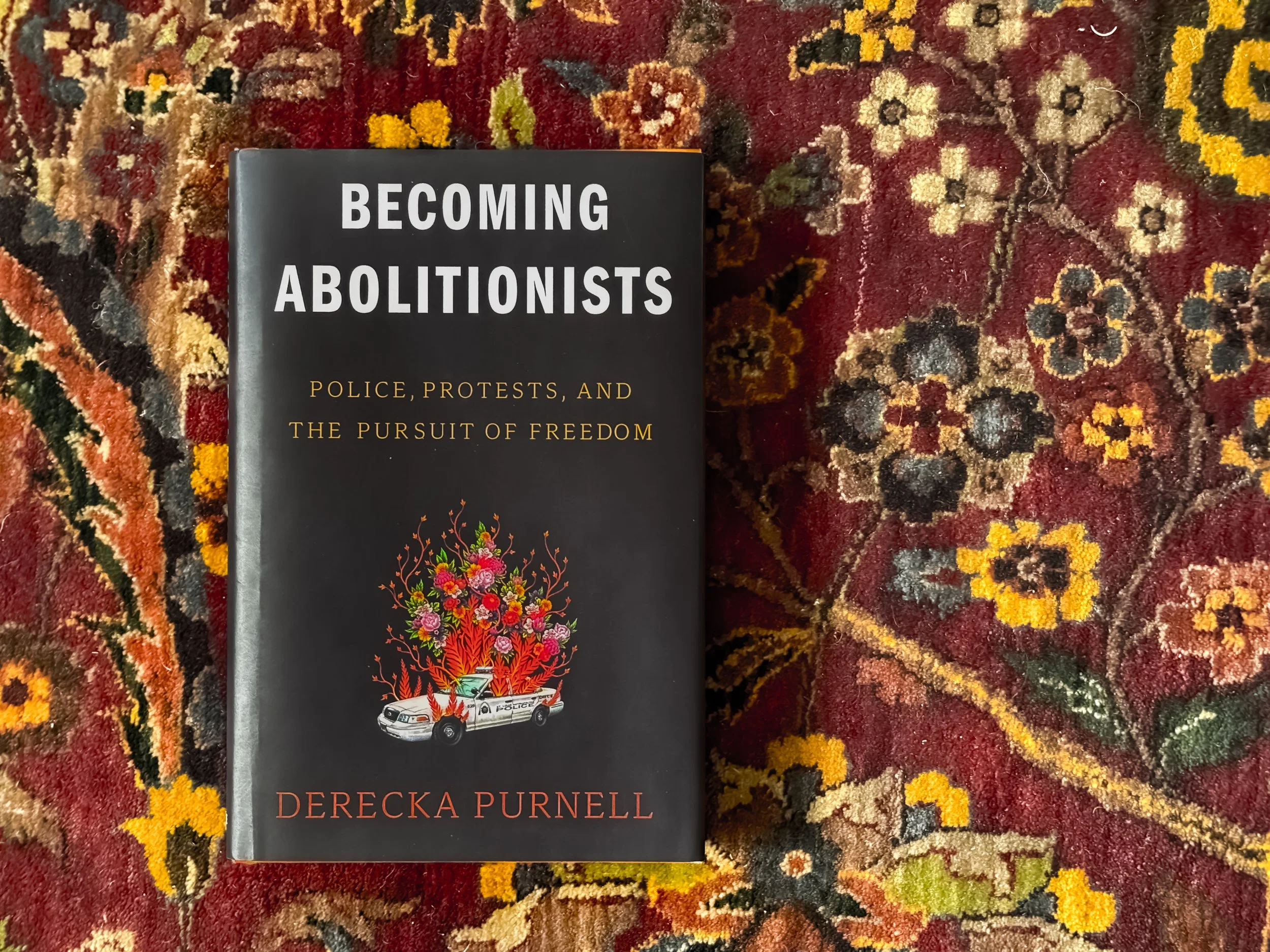
Published in 2021 by Astra House, New York, NY
288 pages
ISBN:9781662600517
LCCN: 2021909564
LCC: HV8139.P87 2021
In the wake of the murder of George Floyd at the hands of police officer Derek Chauvin on May 25, 2020, widespread protests broke out across America, demanding accountability for the police. As such, a wide array of groups and ideologies sprang into popular discourse during this time, such as the resurgence of Black Lives Matter (BLM), which was started years earlier in response to the murders of Trayvon Martin, Michael Brown, Eric Garner, among many others, at the hands of police. While some within the movement called for police reform, many others sought to uproot the institution of policing altogether, banding together under the banner of the slogan “Defund the Police.”
While this stance was often mocked and held at a distance by liberals and was sensationalistically lambasted by the conservative media sphere, the slogan to “defund the police” was just one example of the resurgence of abolitionist thought in mainstream discourses. Many of us on the Left have difficulty communicating why exactly we believe in police abolition, as many of our friends and family may raise an eyebrow when our view is brought up in these conversations. Why should we put our efforts into abolition, rather than in suggesting reforms to the current state of policing?
In her 2021 book, Becoming Abolitionists: Police, Protests, and the Pursuit of Freedom, human rights lawyer and organizer Derecka Purnell offers a deeply personal and sharply analytical account of her personal transformation from a hesitant supporter of police reform to a committed advocate for abolition. By blending personal memoir, historical analysis, and abolitionist theory, Purnell argues that policing cannot be truly reformed, but rather must be reimagined entirely.
Overview:
The narrative arc of Becoming Abolitionists unfolds as a story of political transformation. Raised in St. Louis amidst poverty, racialized violence, and limited access to resources, Purnell recounts a life in which calling the police felt like the only option, even when police themselves were part of the harm. Drawing from her upbringing in St. Louis, Purnell reflects candidly on calling 911 for everything as symptomatic of a system that offers false solace rather than safety. As she becomes politically active during the Ferguson uprising and further educated through law school and organizing, her understanding of the role of police shifts from protective to inherently oppressive.
Taking a historical approach, the book traces the roots of modern policing to slave patrols, the repression of marginalized groups, and the enforcement of capitalist interests, namely the protection of private property. She emphasizes that policing evolved to maintain existing power structures, which makes contemporary reform efforts inherently insufficient. Purnell argues that the police, far from being neutral agents of public safety, are instruments of racialized social control. Drawing on theorists such as Angela Davis, Ruth Wilson Gilmore, and W.E.B. Du Bois, she critiques reformist proposals such as body cameras, community policing, and diversity training as inadequate responses that entrench carceral logic rather than dismantle it.
Interweaving her experiences of childhood trauma, losing friends to violence, and her legal and organizing work, Purnell illustrates how her doubts about abolition gave way to a deeper conviction informed by community struggle and revolutionary love. Rather than offering a singular blueprint for abolition, Purnell invites readers into an imaginative and experimental process of building alternatives to policing, including restorative justice initiatives, community-run services, mental health response teams, access to healthcare and housing, and community-centered conflict mediation. She concludes with an affirmation of abolition as a practice rooted in love, mutual care, and collective freedom as she extends a warm, persuasive invitation to both the "abolition-curious" and skeptics. She encourages collective political imagination, shared experimentation on the methods to accomplish abolition, and advocates incremental steps toward dismantling systemically unjust carceral structures.
Commendations:
There are many notable strengths to Purnell’s work. First of all, I greatly appreciated how she weaves together her own biography with the history and praxis of abolitionist thought. She deftly synthesizes personal narrative with critical theory, bringing it to life and making it relevant to the average reader. She does not merely describe what abolitionism is, but also demonstrates how one becomes an abolitionist through personal experiences, which humanizes what could otherwise be an abstract concept.
I likewise found her intellectual humility to be refreshing. Her journey from reformism to abolition is reflective of the path many readers are likely on as well, making this a deeply accessible and relatable volume. Purnell is gentle with readers and does not demand dogmatic agreement, but rather invites thoughtful reflection. This pedagogical approach is particularly effective in addressing readers who are skeptical or unfamiliar with abolitionist frameworks. Her transparency about her own doubts and fears creates space for transformation.
By doing so, she embodies abolitionism not merely as an intellectual framework but as a moral, spiritual, and communal practice. As someone sympathetic to Christian liberation traditions, I see resonance with the idea of conversion, or a turning of one’s life in light of the revelation of justice and truth. Purnell’s narrative evokes a Pauline shift, not from sin to sainthood, but from complicity to co-liberation, and it offers a theological entry point into the discussion of abolitionist thought.
Additionally, I also deeply appreciated how Purnell grounded her abolitionist theory in its proper historical context, as she lucidly recounts the origins of modern policing in colonial slave patrols, settler violence, and capitalist enclosure. I found this structural-historical lens indispensable in assessing the role of policing in the Western world. Purnell channels insights from both Cedric Robinson’s concept of racial capitalism and Du Bois’s concept of abolition democracy without falling into academic jargon or detachment, always rooting her analysis in real-life examples. She rightly rejects the idea that policing is a neutral institution gone wrong, and instead insists it was designed to uphold white supremacy, facilitate the consolidation of private property, and maintain unjust hierarchies.
Furthermore, by articulating the historical continuity between slavery, segregation, and modern policing, Purnell situates policing within the broader machinery of racial capitalism, emphasizing that reform efforts often function to stabilize rather than challenge oppressive systems. Purnell astutely critiques what are called “reformist reforms” (body cameras, implicit bias training, civilian oversight) as mechanisms that extend the life of policing rather than challenge its necessity. Her engagement with prominent abolitionist thinkers like Ruth Wilson Gilmore and Rachel Herzing reflects a deeply informed and sophisticated abolitionist framework. As a scholar, I found her pronounced clarity on this point to be brilliant. Purnell’s analysis exposes the technocratic temptation to manage violence rather than end the conditions that produce it.
I also found Purnell’s intersectional approach to be particularly useful. Though primarily focused on the United States, Purnell gestures toward the global nature of carcerality. Understanding abolition as fundamentally interconnected with other liberation struggles, she places policing within a broader ecology of harm wrought by centuries of imperial capitalism, including housing displacement, climate violence, sexual violence, ableism, and other lingering effects of empire. Additionally, her vision of abolition is not narrowly anti-police, but a positive program for the restructuring of society around care, community, healing, and justice.
I also deeply resonated with Purnell’s raw honesty and vulnerability, and how she incorporates elements of her faith into her abolitionist framework. Few abolitionist texts allow themselves to be as vulnerable as Purnell is in these pages, especially amidst a community that (unfortunately) is prone to purity testing and rampant infighting. Purnell writes as someone who has grieved, feared, and loved, who has lost friends to state and interpersonal violence, and who understands why people call the police. This honesty allows her to speak to skeptics of abolitionists without condescension and rather with gentleness and compassion.
Finally, through this method, Purnell models an abolitionist pedagogy rooted in grace. While the book does not engage in overt theological analysis, its ethical undercurrents align with liberationist Christian traditions, to which I am deeply sympathetic. Purnell’s vision of community accountability, radical love, and solidarity evokes Christian ethical themes such as the preferential option for the poor, restorative justice, and the rejection of empire. As such, her work opens a critical avenue between the discourses of abolitionist thought and Christian theology, widening the net to bring others into the fold of radical politics.
Critique:
On the other hand, there are a few shortcomings to Purnell’s analysis. First, while Purnell references key abolitionist thinkers, she does not always engage them in sustained dialogue. Readers looking for rigorous theoretical elaboration of concepts like abolition democracy, non-reformist reforms, or carceral geography may find the work more memoiristic than deeply analytical. For academic readers, this may limit the book’s utility as a standalone theoretical text. However, this is arguably a strategic choice to make the book more widely accessible to a general audience, so I cannot fault the book too much in this regard.
This is especially true since Purnell primarily writes with care for those new to abolition. While the invitation is heartfelt, the roadmap to an abolitionist future is sometimes diffuse and ill-defined. Purnell excels at inviting new readers into abolitionist thinking, but she offers limited concrete guidance for community-level action. Purnell could have offered more structured on-ramps, such as practical guides, frameworks for community safety, or more detailed alternatives to policing. As such, readers may benefit from companion texts that outline how to build non-carceral safety infrastructure in schools, neighborhoods, and cities.
Additionally, although she briefly touches on global struggles (particularly post-apartheid South Africa), the book remains largely focused on the U.S. policing regime. Given the global reach of carceral regimes that include border restrictions, militarized policing, and evermore invasive forms of surveillance, a deeper transnational or postcolonial lens would have enriched the analysis. Solidarity must be global, not merely confined to national borders. As such, a wider incorporation of postcolonial or Global South abolitionist traditions would’ve enriched the scope of her call to action.
Finally, given Purnell’s stated Christian upbringing and abolitionism's resonance with Christian values and history (particularly in the Quaker tradition), the absence of explicit theological engagement is noticeable. On one hand, this may be a strategic choice, perhaps to remain accessible to secular audiences and not alienate potential comrades. Yet, it risks missing the chance to activate and mobilize spiritual traditions that have long stood against empire and violence. There are plenty of theological thinkers who could be engaged in dialogue with this topic, such as Dorothy Day, Howard Thurman, Oscar Romero, and James Cone. Purnell is in this lineage, but she does not explicitly claim to be within it. Engaging with these progressive Christian abolitionist traditions, such as the Black Church, Latin American liberation theology, and the Catholic Worker movement, could have deepened her ethical framing and linked her project to a longer lineage of religious anti-carceral struggle.
Conclusion:
Overall, Becoming Abolitionists is a vital contribution to contemporary abolitionist literature, challenging us to question the basic assumptions that we have about policing and safety. It is not an exhaustive theoretical treatise or comprehensive policy manual, nor does it aim to be. Rather, it is an urgent and intellectually honest invitation to expand our imaginative horizons and envision a world where policing is obsolete and justice is relational. Purnell balances memoir and manifesto with unusual grace, helping readers not just to understand abolition but to feel its urgency and possibility.
Purnell’s work is particularly noteworthy for its accessibility to readers who may be new to abolitionist thought while simultaneously engaging with core debates in contemporary critical criminology, Black radicalism, and intersectional justice. It’s a phenomenal entry point into these discourses, although one that must be supplemented with deeper theoretical and global work. But for organizers, church communities, educators, and seekers of justice, it may be one of the most important abolitionist texts of the past decade, as it opens the door to deeper discussion and encourages us to take action.
Purnell’s work offers a compelling articulation of abolition as both a political commitment and a spiritual practice. Purnell’s abolitionism reflects the radical heart of the Gospel by imagining a world where the last are first, the captives are free, and the “law” is written not on tablets of stone, but in acts of love, justice, and mutual care. In an America committed to managing inequality through carceral punishment, Purnell dares to insist on a different future where communities have the resources to thrive and the collective capacity to respond to harm without relying on institutions designed to perpetuate it. We currently reside in an America marked by overlapping crises of legitimacy, increasing violence, and political disillusionment. Purnell offers a way forward that is both radical and deeply humane, bravely attempting to imagine a life of dignity and justice beyond our broken systems. In a socio-political moment when brutality is too often mistaken for stability, that in itself is nothing short of revolutionary.