
Toward Freedom: The Case Against Race Reductionism - Touré F. Reed
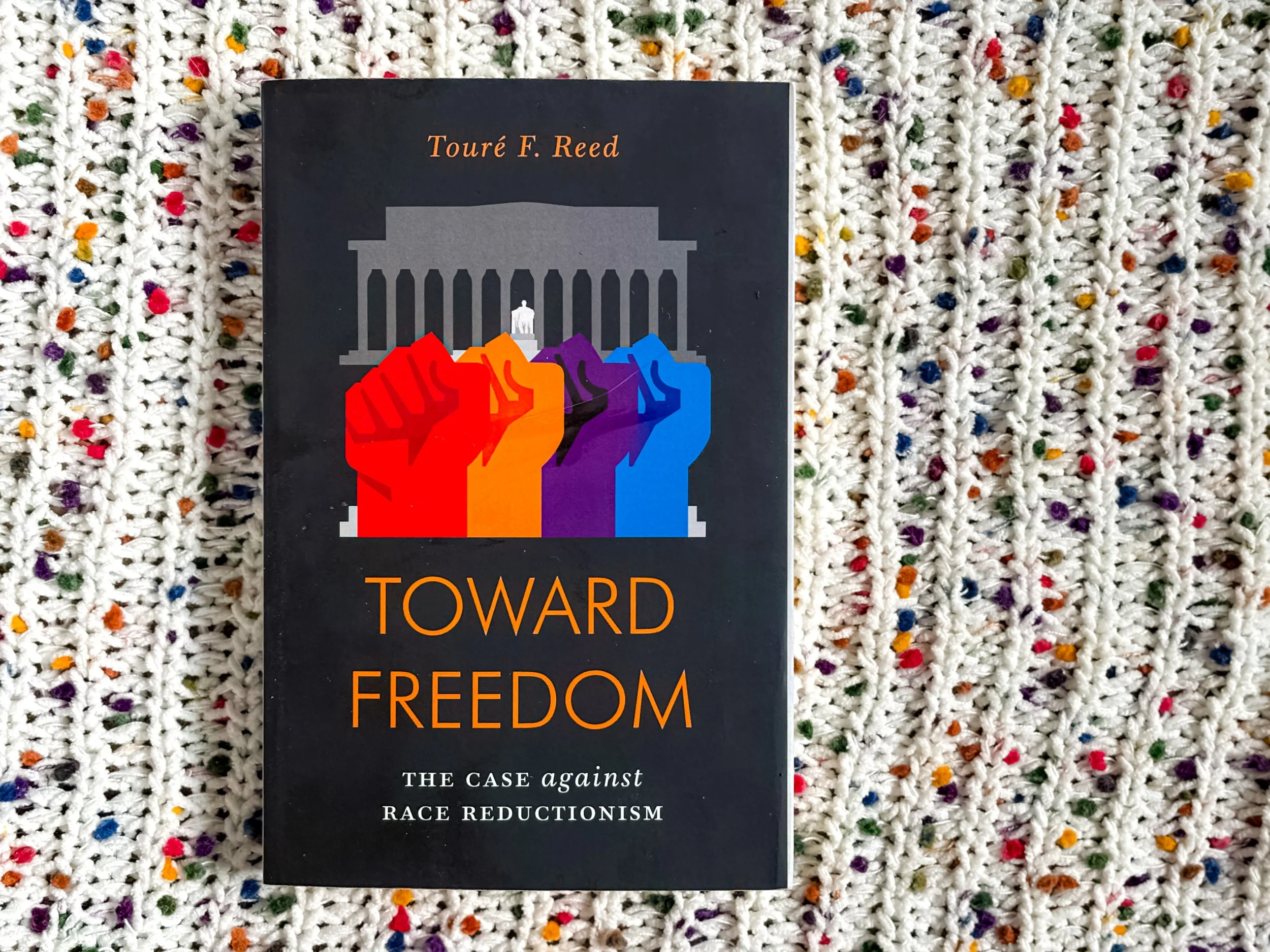
Published in 2020 by Verso, London, UK and New York, NY
224 pages
ISBN: 9781786634382
Debates over race relations in the United States, particularly as they affect African Americans, are once again at the center of public discourse, shaping electoral politics, workplace norms, university curricula, and the language of protest and reform. In the wake of the Black Lives Matter protests in 2014 and 2020, growing attention to racial disparities coincided with an intensification of identity-based frameworks that foreground issues of representation. Yet, these demands too often occurred alongside the sidelining of economically redistributive ambitions and initiatives.
On one hand, racial inequality is more publicly acknowledged than at any time in recent memory. Yet, on the other hand, the horizons of what counts as a viable response to that inequality have narrowed dramatically. At the height of this contradiction in the late 2010s and early 2020s, elite institutions and multibillion-dollar corporations embraced the language of antiracism and representation, even as material conditions for the Black working class continued to deteriorate under racialized austerity, carceral expansion, and the neoliberal destruction of labor rights. Thus, it should come as no surprise that, in the wake of the second Trump administration, these same companies have bent the knee and capitulated to the “anti-woke” stance of the federal government, reversing the very same DEI (Diversity, Equity, and Inclusion) initiatives that were praised by liberals. As we can clearly see, the only fealty that these institutions and corporations have is to the power of capital.
This, however, is not a new problem. For much of the past half-century, liberal politics in the United States have largely treated racial inequality as a problem best understood and addressed through an increased awareness of race itself. In this framework, economic, political, and social disparities are primarily explained as byproducts of racism and white supremacy, which are conceived as enduring moral forces that are a result of cultural dysfunction and implicit bias. As such, the proposed solutions to these disparities too often take the form of symbolic inclusion, more diverse representation in leadership, and technocratic fixes that ignore the systemic roots of the issue.
By acquiescing to various forms of race reductionism, this liberal framework, far from advancing racial justice, has instead helped to hollow it out. In his 2020 book, Toward Freedom: The Case Against Race Reductionism, historian Touré F. Reed offers a historically grounded critique of how contemporary approaches to race (particularly in the form of liberal antiracism) have reshaped, and in many cases constrained, the political imagination around Black freedom in the United States. By anchoring Black inequality in the histories of capitalism, state power, and class struggle, Reed pushes back against the widespread tendency to treat racism as a free-floating moral pathology or an "original sin” that’s been culturally inherited. Instead, he advocates for a revival of public-goods–oriented and class-inclusive politics that can build durable coalitions for economic justice and significantly reduce racial and class inequalities.
Overview:
Reed structures his argument into two main components. Reed begins by situating race reductionism (the idea, popularized by his father, Adolph Reed Jr., that racial inequality is best explained or addressed solely through race-centric analyses detached from class and political-economic forces) as a defining feature of postwar liberal thought, emerging alongside the decline of class-based mass politics and the consolidation of technocratic governance. He contrasts this framework with earlier Black progressive traditions, which understood racial inequality as inseparable from struggles over employment, wages, housing, and public goods. In recovering these traditions, Reed challenges the assumption that class-centered approaches represent a departure from, rather than a continuation of, Black radical political thought.
The second section of the book consists of three case studies that show the shortcomings of a liberal pluralist approach to racial disparity, which often treats inequality as pathological or institutional rather than tied to historical and material conditions. By critically examining the works of Oscar Handlin (Chapter 2), Daniel Patrick Moynihan (Chapter Three), and the contemporary approaches of Obama and Ta-Nehisi Coates (Chapter Four), Reed traces how ethnic pluralism, cultural explanations of poverty, and identity-centered frameworks came to dominate policy discourse, often with conservative political effects. For example, Reed’s discussion of the Moynihan Report exemplifies this shift, as cultural pathologization displaced structural analysis, narrowing the scope of redistributive policy while leaving underlying economic transformations untouched. Reed concludes by arguing that contemporary liberal antiracism, however radical it may seem on the surface, remains compatible with neoliberal political economy precisely because it avoids confronting class power, labor relations, and the distribution of public goods.
Deeper Dive:
In the first chapter, Reed recounts the historical relationship between the black community and labor organizations during the first decades of the 20th century. In contrast to modern frameworks, Black progressives in the New Deal and World War II era linked racial justice to class and economic issues. Reed shows that early civil rights activism and labor movements understood racial inequality through material conditions such as employment, labor rights, and economic redistribution. As such, Black activists and unionists understood that economic rights were central to racial justice, which allowed them to build strong coalitions across race and class.
In Chapter Two, Reed begins his series of case studies that illustrate how postwar liberalism turned away from structural, materialist critiques of racialized structures and toward individualist, moral, and cultural frameworks to explain disparity. Using historian Oscar Handlin’s ideas as an example, he argues that this shift harmonized with conservative political currents and helped disconnect antiracist goals from economic solidarity or class-based reforms. As he writes,
While New Deal-era Communists, socialists, and labor-liberals situated both racism and racial discrimination within a larger context of capitalist labor and social relations, white liberals during and following World War II tended to treat racial inequality as a moral dilemma. In other words, liberals came to see racism—the belief in immutable biological group hierarchies—as contradictory to the nation’s fundamental commitment to the basic equality of individuals. This disposition would only intensify during the Cold War, as policymakers bound their opposition to racism to a human rights discourse that rejected economic security—the right to a job, a living wage, health care and so on—as a right that should be guaranteed to citizens of so-called civilized nations and, instead, identified values consistent with liberal capitalism—the right to personal expression, private property, religious freedom—as universal rights. (54)
In Chapter Three, Reed launches a critique against Daniel Moynihan’s 1965 report, The Negro Family: The Case For National Action (more popularly known as The Moynihan Report). Reed contends that the report has seen a resurgence of defenders over the past, who often blame single-parent families, out-of-wedlock births, and the “matriarchal” structure of Black families to be the root cause of socio-economic disparity. Reed writes,
Moynihan’s observations about the black family are thus prescient only if one attributes the failures of the War on Poverty to black social pathology, sidestepping the implications of the Johnson administration’s embrace of commercial Keynesianism. Indeed, the visionary status Moynihan has attained in the decades following the publication of The Negro Family is illustrative of the triumph of market ideology and neoliberal antistatism, as it all but ignores the fact that left-liberal economic structuralists like Killingsworth, Harrington, and Rustin anticipated the failure of the War on Poverty, arguing, in contrast to the CEA and Moynihan, that contemporary poverty was the product of automation, mechanization and deindustrialization rather than a decline in aggregate demand or a surge in social disorganization. (90-91).
As such, Reed argues that the Moynihan Report and the Johnson administration’s War on Poverty promoted policy frameworks that blamed Black culture for persistent Black poverty, which diverted attention from deeper economic dynamics. This in turn failed to build the kind of robust redistributive, public-goods politics that could truly address economic inequality.
This same pattern, Reed argues, persists today. In his lengthy final chapter, Reed takes aim at two dominant figures of contemporary racial discourse: Barack Obama and Ta-Nehisi Coates. Though often treated as ideological opposites (the former “postracial,” and the latter relentlessly race-conscious), Reed argues that both operate within a neoliberal framework that leaves class power untouched. Obama’s emphasis on personal responsibility and civic uplift and Coates’s moral indictment of white supremacy ultimately converge in their pessimism about collective economic transformation. In a scathing critique against Coates, Reed writes, “Coates’s insistence that so-called racial issues exist in a world apart from economic issues is not a critique of postwar liberalism but is, at best, a call for continuing along the same path that has failed most black Americans since the Johnson administration. At worst, it is a call for no more than ritualized acknowledgment of white privilege and black suffering” (157-158). Even though they may speak in different registers, Reed argues, both Obama and Coates accept a political world in which mass economic redistribution is off the table of consideration.
In his Conclusion, Reed takes several prominent liberal figures to task for their race reductionist stances, including Joy-Ann Reid and Ezra Klein, who often obfuscate the role of class in their analyses. He also deconstructs economist Raj Chetty’s meta-analysis of racial disparity in America, arguing that it ignores the role of class and implicitly borrows from sociological methods of the Chicago School, which “took for granted the logic of industrial capitalism” and “diminish political economy’s influence over racial disparities” (167). He argues that these race reductionist views undermine the potential for coalitions grounded in class struggle and shared economic interests to form a coherent political bloc. As such, Reed calls for a revival of a politics grounded in redistributive public goods, public works programs, and class-based alliances, which is a strategy he sees as more effective for reducing both racial and economic inequality than approaches that focus narrowly on race alone.
Commendations:
There are several notable strengths to Reed’s assessment. First of all, Reed compellingly demonstrates that earlier Black progressive traditions, from New Deal–era labor politics to mid-century civil rights organizing, did not set the categories of race and class against one another but understood racial oppression as politically mediated through labor markets, state policy, and class power. These earlier generations of Black progressives understood racial subordination as inseparable from labor exploitation, unemployment, housing scarcity, and the erosion of public goods. For these activists, civil rights was not simply about recognition or representation in the dominant culture of America, but rather about access to jobs, unions, welfare, and democratic control over the economy.
Reed’s central point is thus to expose how race reductionism has become hegemonic in liberal and even progressive discourse, often with counterproductive results. Reed insists that today’s race-first discourse is not the natural inheritance of Black radical politics but a sharp break from it. This history matters because it undercuts the central assumption of contemporary liberalism that class politics is either racially blind or politically regressive. The problem today, he suggests, is not that the Left talks too much about race, but that it talks about race in a way that floats free of material analysis.
I found this to be an essential corrective against contemporary liberal narratives that retroactively project today’s identity-centered frameworks onto historical Black radicalism. Reed rightly insists that figures and movements we now canonize as “racial justice” actors were often pursuing universalist, redistributive, and solidaristic agendas because they recognized capitalism and state power as its key mediating structures. They took an intersectional approach, recognizing race and class as mutually constitutive within a broader struggle for economic democracy. White supremacy and racialized oppression are real and have tangible effects, yet they are not free-floating signifiers detached from the realities of political economy. Rather, they are the results of racialized capitalism.
Additionally, Reed is particularly strong in exposing how contemporary liberal antiracism often functions as an ideological supplement to neoliberalism rather than a challenge to it. His analysis of post–civil rights liberal governance—especially in the chapters on the Moynihan Report and Obama-era politics—shows how race-centered explanations too often naturalize inequality as cultural or behavioral, which in turn legitimizes technocratic, non-redistributive policy responses that ultimately work to fragment working-class coalitions.
As such, I found Reed’s three case studies of postwar liberal policymaking to be particularly illuminating. His discussion of the Moynihan Report and the War on Poverty reveals how cultural explanations of Black poverty displaced structural ones just as deindustrialization, capital flight, and labor repression were reshaping American society. By locating inequality in family structure and behavior rather than in political economy, liberalism narrowed the scope of reform and disarmed mass redistributive politics.
Accordingly, Reed’s critique lands hardest on the political consequences of liberal antiracism, as evident in the work of Obama and Coates. Their politics, which is centered on representation and discourse, he argues, is all too easily absorbed by institutions that have no interest in redistributing wealth or power. The result is a world in which inequality deepens even as elites become more diverse, a condition which Reed describes as “precarity for all but a diverse few.”
Finally, I also deeply appreciated how Reed is deeply attentive to policy outcomes and the political feasibility of his prescriptions. He repeatedly asks not only whether race-reductionist frameworks are morally compelling, but whether they actually produce tangible and durable redistributive outcomes. Reed’s insistence on investing in public goods, universal programs, and strengthening labor power reflects a sober understanding of how social democratic gains have historically been won, and it speaks directly to contemporary discussions about coalition-building and the limits of identity-based policy interventions.
In short, Reed provides a clear-eyed assessment of why durable egalitarian reforms have historically depended on mass, cross-racial working-class politics. As such, his work implicitly supports strategies like universal healthcare and labor law reform while also showing why race-targeted or discourse-heavy approaches often fail to mobilize mass constituencies. By examining these various policy outcomes rather than merely the discursive rhetoric of politicians, Reed gives his argument a strategic seriousness that is too often lacking in academic debates on race.
Critique:
On the other hand, there are a few shortcomings to this brief work. First of all, for those who have no background in the labor history of the early 20th century, Reed’s account may be difficult to parse through, especially in the first chapter. Reed throws the reader into the deep end from the start, especially in the first chapter on the history of Black labor movements and organizations in the early 20th century. As such, while the casual reader can still glean much from this volume, it might take a bit of initiative to become acclimated to Reed’s rapid pace.
Additionally, in pushing back against the concept of race reductionism, Reed sometimes underplays the extent to which capitalism itself has been structured through racial domination. Slavery, colonialism, and empire were not simply contexts in which class exploitation occurred. Rather, these contexts gave rise to the continuation and particular form of capitalism that we are left with today. While he correctly challenges the way in which liberal historians have often treated race as analytically autonomous from capital, Reed under-theorizes the ways in which racialization has historically functioned as a constitutive mechanism of capitalist accumulation, labor segmentation, and imperial expansion. As a result, the book sometimes risks implying that race-centered analyses are primarily a political misstep rather than an incomplete attempt to theorize capitalism’s racialized development. By engaging more fully with theories of racial capitalism and decolonial thought, Reed might have offered a richer account of how race and class are not merely aligned but historically co-produced.
Relatedly, Reed occasionally flattens the ideological terrain of race-centered thought, often treating liberal multiculturalism, Afropessimism, and certain strands of decolonial critique as variations of the same analytic error. By grouping these approaches together under the banner of race reductionism, Reed can often obscure the internal debates within these more race-centered forms of scholarship, some of which explicitly foreground political economy and the effects of imperialism. I found Reed’s framework to be a bit too dismissive at points, as he can often overlook important differences among these traditions, many of which are explicitly hostile to liberalism and deeply attuned to class politics, even if they diverge from Reed’s strategic conclusions.
Finally, while Reed correctly rejects various stands of moralist and culturalist explanations of racial inequality that treat race as an abstract or transhistorical category, his account leaves somewhat underdeveloped the analysis of race as a lived and coercive social relation, particularly in domains such as policing, incarceration, and migration. These dimensions of lived experience cannot always be boiled down and reduced to domestic class politics, even if racial oppression is a result of material processes. A more dialectical approach would recognize that race is neither autonomous nor secondary, but co-constitutive with class under capitalism. At times, Reed’s argument risks being read (especially by less careful or bad-faith inclined readers) as dismissive of racial domination rather than critical of how it has been insufficiently theorized over the past century.
Conclusion:
Overall, Toward Freedom remains a valuable and necessary intervention in contemporary left and liberal debates on the relationship between race and class in America. While it would benefit from a more sustained engagement with the dynamics of racial capitalism and decolonial theory and might be too dismissive in places, Reed’s account still succeeds in challenging prevailing orthodoxies and reopening essential questions about the material foundations of racial inequality and the strategic horizons of emancipatory politics. Reed’s sustained critique of race reductionism is persuasive and historically grounded, and his call for a renewed emphasis on class dynamics and universal public goods deserves careful consideration by scholars and activists alike.
Placed within the contexts of today’s increasingly bitter debates over race, policing, inequality, and the excesses of “identity politics” and “wokeness,” Toward Freedom skillfully challenges the reigning common sense of liberal antiracism. He calls us to ask what racial justice means in a society structured by racial capitalism and the legacies of settler colonialism, as well as what kind of politics can be implemented to materially improve the lives of African Americans in an era of deepening economic precarity. For African Americans, whose oppression has always been tied to the exploitation of their labor, dispossession, and state violence, Reed argues that freedom cannot be achieved through moral indictment alone, nor through elite representation that leaves underlying power relations intact. Rather, it must be rooted in class struggle, expansion of democracy into the workplace, and a revival of public goods and redistributive policies.
Whether one agrees with all of his conclusions or not, Reed forces us to confront the limits of the prevailing racial discourses with which we are familiar, as he challenges us to consider how race relations in the United States might be transformed not simply through better language or more diverse representation, but through confrontations with the political and economic structures that continue to shape Black life. In doing so, Reed reopens a necessary and often uncomfortable debate about the meaning of racial justice in the twenty-first century. At a moment when the Left is searching for strategies capable of confronting inequality at its roots, Reed’s call for a return to mass, universalist, class-based politics as a way to address racial injustice is vital to consider.