
Why Are All the Black Kids Sitting Together in the Cafeteria? And Other Conversations About Race - Beverly Daniel Tatum
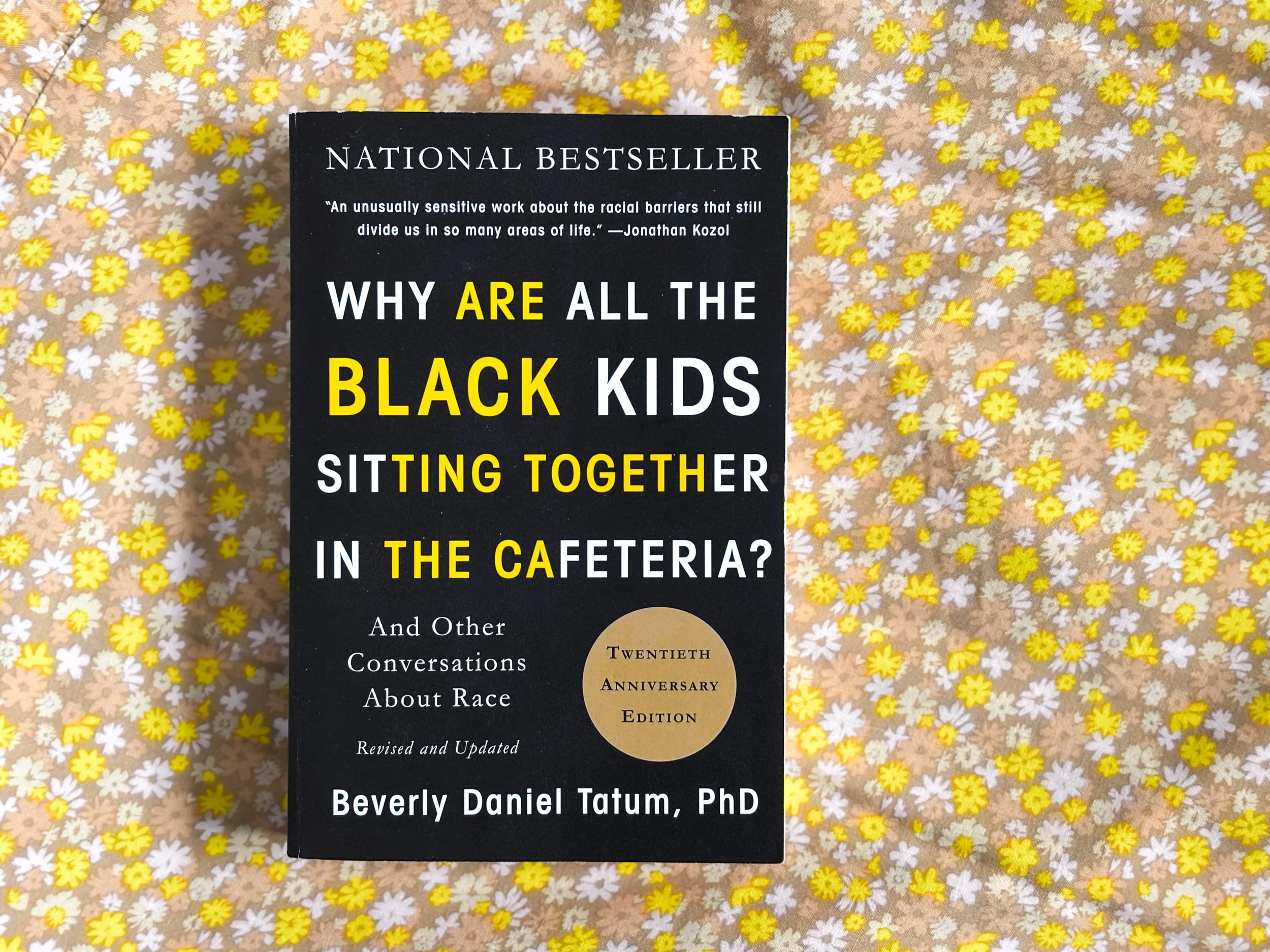
Revised and Updated Edition published in 2017 by Basic Books, New York, NY
464 pages
ISBN: 9780465060689
In the three decades since the ascendance of the neoliberal consensus and gradual right-wing shift in American political discourse, the United States has oscillated between the language of racial transcendence and the reality of racial retrenchment. From the juridical narrowing of civil rights protections to the resurgence of overt white nationalist organizing, from increased carceral expansion to the racialized ravages of the COVID-19 pandemic, contemporary American life makes plain that racism is neither aberrational nor anachronistic but constitutive of the nation’s social architecture.
At the same time, public discourse has become saturated with defensive anxieties about how (or even whether) race should be discussed in classrooms, workplaces, and other civic institutions. At a time when school board meetings become ideological battlegrounds, state legislatures are policing classroom syllabi, and conservatives have weaponized anti-wokeness into a governing ideology, the United States is once again locked in a struggle over who gets to narrate its racial history and to what end. The fabricated moral panic against so-called critical race theory, the sanitizing of textbooks to remove “divisive concepts,” and the disciplining of teachers who dare to name white supremacy are all part of a broader counterrevolution against the multiracial uprisings that followed the police murder of George Floyd and the renewed demands for structural change.
The past decade has starkly revealed America’s profound resistance to reckoning with the darker aspects of its history. Even so, many well-intentioned white Americans have sought to resist this dehumanizing rhetoric and have looked to resources on the dynamics of racism and identity formation in American society. One of the most widely cited and adopted texts in the domain of racial literacy and education in the United States has been American psychologist and educator Beverly Daniel Tatum’s 1997 book, Why Are All the Black Kids Sitting Together in the Cafeteria?: A Psychologist Explains the Development of Racial Identity. Updated and revised in 2017, Tatum’s work offers an expansive overview of racial identity development, particularly among adolescents in educational contexts, with a focus on facilitating constructive dialogue across racial lines.
Overview:
Tatum’s best-selling work is widely regarded as one of the most influential books on race in American educational and psychological discourse. Throughout the book, Tatum employs psychological research and real-world anecdotal examples to explain how racial identities form and why open conversations about race are vitally important to building empathy and solidarity. Drawing from developmental psychology while remaining attentive to the long history of slavery, segregation, and racial capitalism, Tatum offers a structural account of how racial identity is formed in childhood and constantly negotiated in a society organized by hierarchy.
Tatum explores the book’s titular question by showing that when Black students (or other students of color) cluster together in schools or other settings, it often is not about exclusion or hostility toward other groups. Rather, it is a response to living in a society where race profoundly shapes people’s experiences. Particularly during adolescence, individuals begin to understand how others perceive them, and marginalized students may seek out peers with similar experiences for comfort and support.
Tatum explains in detail how these self-concepts of racial identity develop for people of different backgrounds and how societal messages about race influence this process. She also discusses concepts such as the formation of white identity, white privilege, and the pervasiveness of various forms of color-blind ideologies, which can prevent meaningful understanding of racial inequality. She argues that avoiding discussions about race lets racism persist, whereas honest dialogue can lead to insight and change, even if it might be uncomfortable. As such, Tatum’s work combines psychological theory, personal stories, and practical suggestions, which have made it especially appealing for educators, parents, and anyone who wants to talk more constructively about race and work toward equity.
Deeper Dive:
In the lengthy Prologue to the 20th Anniversary Edition of the book, Tatum provides an update to many of the trends that she documented in her original text. She also takes time to meticulously recount the myriad array of political and social events that have occurred over the past 20 years, including the election and eventual disillusionment with Barack Obama, the Black Lives Matter protests in 2014, and the ascendance of Donald Trump to the presidency in 2016. She argues that while the U.S. has become more demographically diverse, our schools have effectively moved backward since the 1980s and provides a few factors that are driving this trend.
First, Tatum highlights that the Great Desegregation of the 1970s and early 80s has largely been undone. The number of intensely segregated schools (those with 0–10% White enrollment) has more than tripled since 1988, as private/charter schools have been drivers of this trend. Nationwide, nearly 75% of Black students and 80% of Latinx students attend majority-minority schools. Surprisingly, she points out, the Northeast has become the most segregated region for Black students, as more than 51% of Black students attend schools that are 90–100% non-White in this area (4).
To explain why this is happening, Tatum identifies several systemic setbacks that have acted as a tailwind for this trend of re-segregation. Since most children attend schools within their own neighborhood, the persistent residential segregation driven by historical redlining and modern economic disparities automatically creates segregated classrooms. Additionally, between 1974 and 2007, a series of Supreme Court decisions made it harder for districts to use tools like cross-district busing or race-conscious assignment plans to maintain diversity. The economic crisis wrought by the Great Recession of 2008 also hit Black and Latinx families the hardest, widening the wealth gap and further restricting where families could afford to live.
Tatum is careful to point out that the problem is not just the lack of White students, but rather the concentration of poverty. Segregated schools are significantly more likely to have high concentrations of poverty, as they face a resource gap, including less experienced teachers, higher staff turnover, and fewer advanced placement (AP) courses. Tatum argues that when we allow schools to re-segregate, we are institutionalizing a hierarchy of opportunity. For the kids in the cafeteria, this re-segregation means that their first meaningful contact with people of other races often doesn't happen until college, if it even happens at all. This lack of early, natural interaction makes the "adolescent encounter" with race even more jarring and the need for "safe harbor" groups even more vital. This is, for Tatum, especially salient in the wake of Trump’s ascendancy to the presidency, which has been marked by overtly racist and xenophobic language and policies.
In Chapter One, Tatum begins by distinguishing the difference between prejudice (which is a preconceived judgment or opinion based on limited information) and racism (which is a system of advantage based on race that perpetuates inequality). She uses the analogy of smog to illustrate how pervasive and often invisible racism is in society. For Tatum, racism is like environmental pollution. We don't ask to breathe it in, but we all do anyway, and we all have a responsibility to clean it up. This chapter also introduces the concept of the "moving walkway", emphasizing that "passive racism" (doing nothing in the face of injustice) still contributes to the system's momentum.
In Chapter Two, Tatum explores the multifaceted nature of identity formation, highlighting how race intersects with other aspects such as gender, class, and sexual orientation. Identity is not just how we see ourselves, but how others see us, which Tatum calls the "Looking Glass Self." Tatum explains that for people in dominant groups (White, male, heterosexual), their identity is often "transparent" or unnoticed because it is the societal norm. For marginalized groups, identity is constantly front-of-mind because it is frequently challenged or stereotyped by the outside world. As such, Tatum discusses how individuals navigate their identities within societal structures that privilege certain groups over others.
In Chapter Three, Tatum debunks the common myth that children are colorblind. She explains that children notice physical differences from an early age and begin to absorb societal hierarchies. If adults remain silent when children ask about race, the children often conclude that race is a taboo topic, leading them to fill the silence with stereotypes they see in the media. She also discusses how Black children often become aware of their racial identity early on, especially in predominantly White environments, and how this awareness shapes their experiences and interactions.
In Chapter Four, Tatum focuses on the adolescent years, which is a critical period for racial identity development. She explains how experiences of racism and the need for belonging can lead Black adolescents to seek out same-race peers, often leading to the phenomenon of Black students sitting together in the cafeteria. As Black children enter puberty, they experience an "Encounter" stage where they realize the world views them through a racial lens (often as a threat or a stereotype). As a result, these teenagers will seek out what Tatum calls “safe harbors” among their Black peers to process these new, often painful, experiences. As such, Tatum makes clear, this grouping is not about exclusion, but rather about finding a supportive community to build a healthy self-concept.
This journey, however, does not simply end in high school. In Chapter Five, Tatum discusses how racial identity continues to evolve well into adulthood, as she highlights how adults navigate their racial identities in various contexts, such as the workplace and other social settings. She explores the "Internalization" stage, where an individual feels secure in their Black identity and can engage in meaningful relationships with people of other races without losing their sense of self. She also discusses the "burden of representation" often felt in the workplace and the challenges many black Americans face in maintaining a positive racial identity in a racially stratified society.
In Chapter Six, Tatum shifts her focus onto how White individuals develop their racial identity, and how this can lead to building effective alliances and solidarities across racial lines. Utilizing the framework of counseling psychologist Janet Helms, Tatum outlines a path from "Contact" (ignorance of privilege) through "Disintegration" (guilt and discomfort) to "Autonomy" (a positive, anti-racist White identity) and discusses the challenges White people face in confronting their own racial identity and the privileges associated with it. She argues that by working through their own racial formation through dialogue and exposure to other groups, Whites can become allies and strengthen the coalition needed to effect social change.
In Chapter Seven, Tatum explores the complexities surrounding affirmative action policies and how they intersect with White identity, including claims of perceived reverse racism. She discusses the misconceptions and resistance that often arise among White individuals regarding these policies and the importance of understanding the historical context of racial inequalities. She argues that a lack of understanding of systemic history leads many White people to view equity programs such as Affirmative Action as personal attacks rather than necessary systemic corrections, and that we must move toward Goal Oriented Affirmative Action, which is more inclusive and also strengthens businesses and their bottom line, as “companies that have increased their representation of women of all backgrounds and men of color have outperformed less-diverse companies in stock performance and reputational standing” (229).
In Chapter Eight, Tatum broadens the discussion to include the racial identity development of other communities of color. Tatum examines the unique challenges and experiences faced by Latino, Native American, and Asian Pacific American individuals in navigating their racial identities within a predominantly White society. As such, she examines how the Model Minority myth exacts a psychological toll on Asian Americans, as well as how Native Americans are too often rendered invisible in discourses on race. Additionally, she discusses how Latinx identity can often be bound up in ambiguity, as it encompasses many races and national origins, which makes their search for belonging uniquely complex. Finally, she also highlights how Middle Eastern Americans have navigated their own sense of identity, especially in the wake of the rampant Islamophobia that has arisen in post-9/11 American discourse.
In Chapter Nine, Tatum discusses the experiences of individuals from multiracial backgrounds, highlighting the complexities they face in forming their racial identities. With the rise of interracial marriages and multiracial births, Tatum devotes this section to addressing the historical context of racial categorization in the U.S., including the one-drop rule and how this has influenced the experiences of multiracial individuals. For example, in navigating the “both/and” and "neither/nor a" aspects of multiracial identity, many multiracial children often face pressure to choose a side. Tatum points out that rather than feeling excluded in a neither/nor paradigm, these children benefit most from a both/and identity that acknowledges all parts of their heritage. She likewise emphasizes that parents (especially White parents of children of color) must be proactive in providing their children with the cultural tools and vocabulary to handle a world that will likely perceive them as Other.
Tatum’s work concludes with a call to action. In the Tenth and final chapter, she emphasizes the importance of open and honest conversations about race. She encourages individuals to engage in cross-racial dialogues to foster understanding, challenge stereotypes, and work towards a more equitable society, arguing that finding our own voices is the first step toward institutional change. Tatum addresses the common fear of saying the wrong thing and the polite silence that too often keeps progress stalled when it comes to cross-racial dialogue. She argues that the goal is not about achieving a post-racial world where we don't see color, but a world where we see color and still communicate effectively. Tatum believes that it is crucially important to find your spheres of influence, such as your family, your office, and your school, and to start making active changes there. While individual change is vital, it must lead to collective action to dismantle the moving walkway of systemic racism.
In her Epilogue to the 2017 edition, Tatum brings it back full circle by revisiting several of the themes that she explored in the Introduction. As such, she reiterates both the progress made and the setbacks encountered since 1997, specifically mentioning the Black Lives Matter movement and the changing demographics of the U.S. as catalysts for continued, necessary conversation. She also talks about her experiences speaking at colleges across the country and witnessing their various interracial dialogue initiatives. Tatum argues that one of the most important things that we can do is to listen and promote empathetic dialogue.
Commendations:
There are several notable strengths to Tatum’s work. One, which shouldn’t be too surprising given its best-seller status, is its accessibility. Tatum employs both psychological research and everyday stories to make her content relatable to the average reader. As such, it has been able to reach educators, parents, and students outside of the world of academia, acting as a gateway text into more complex conversations about race, privilege, and socialization. Its imminently accessible language and widespread use make it a valuable tool for building a baseline consciousness of the process of racial identity formation, especially for liberal or resistant audiences.
One of her greatest contributions is her ability to draw on both William Edward Cross Jr.'s theory of Nigrescence and Erik Erikson’s model of psychosocial development, and to apply them to the discourse of racial identity formation. Tatum is especially astute in her ability to explain the psychic defense mechanisms involved in racialization. She offers a compelling account of how racial consciousness emerges among youth, particularly in environments structured by Whiteness, and she deftly explains why Black adolescents may self-segregate in school environments as a necessary phase of identity affirmation under racial duress. In this way, Tatum challenges the tendency of mainstream psychology to pathologize the behavior of Black youth as inherently deviant or dysfunctional. In psychoanalytic terms, these groupings act as a containing environment where the ego can be repaired after the daily micro-assaults of a white supremacist society.
Additionally, Tatum’s affirmation of racial identity as a psychological necessity under structural oppression is an invaluable contribution, providing psychological evidence to buttress the foundational ideas of decolonial theory. For example, Tatum’s work echoes Frantz Fanon’s insistence that Black people must reconstruct the self in the face of sociogenic trauma, although Tatum’s analysis remains largely intra-psychic and institutional, rarely venturing into the historical-material terrain of colonial domination and global racial hierarchies (a topic I explore more in-depth later in my critique).
Furthermore, I found Tatum’s moving walkway analogy to be particularly effective in communicating how systemic racism can function even through passivity. It successfully shifts the definition of racism from a simple moral failing to a structural positionality of systemic advantage. This shift allows for a materialist analysis of how individuals benefit from and perpetuate a racist status quo, even if they have good intentions. Tatum deftly utilizes William Cross’s and Janet Helms’s psychological models to provide a clear, linear trajectory for the process of racial maturity. This is incredibly useful for clinicians and educators because it provides a predictive framework for the turbulence of adolescence and the cognitive dissonance that so often accompanies the feeling of white guilt.
Finally, Tatum does well to emphasize the importance of interracial dialogue as a constructive avenue for self-discovery and meaningful change in the lives of individuals. In particular, Tatum’s emphasis on initiating critical conversations about race in a school setting reflects her commitment to advancing racial literacy and pedagogical reform. It should come as no surprise, then, that especially in predominantly white educational spaces such as the book club in which I read it, her work has prompted many educators to examine their own biases and to rethink their supposedly “colorblind” practices. Also, as someone who has professionally worked in interfaith organizations, I also agree with Tatum that dialogue can be a way to encourage intersubjective recognition of the other across lines of difference, which can be an important step in effecting meaningful change.
Critique:
On the other hand, Tatum’s work also suffers from a few key weaknesses. While Tatum rightfully articulates racism as a system of advantage based on race, her analysis ultimately remains confined within a liberal reformist framework. The primary remedies to racism that she offers, including greater dialogue, internal interrogation/reflection, and pedagogical inclusion, all assume that existing structures such as schools, universities, and corporations are essentially legitimate and reformable. The goal for Tatum is not to dismantle the racial state or the capitalist logic of surplus labor expropriation and dispossession, but to improve existing institutions so that they better reflect the principles of inclusion and pluralism, as she seeks to help individuals develop healthy identities within the current American framework. Whereas more radical writers such as Cedric Robinson teach us to see racialism as constitutive of capitalism itself, Tatum focuses instead on how to help individuals thrive within these same structures.
This gap is significant because, as scholars such as Ruth Wilson Gilmore and Angela Davis have shown, institutions that appear race-neutral often function as racialized technologies of containment and discipline. Tatum’s solutions, grounded in better representation and dialogue, insufficiently account for how these institutions are themselves racial projects, fundamentally invested in preserving White domination. Tatum’s near silence on the prison-industrial complex, imperial violence, or settler colonialism suggests that the systemic racism she critiques is framed narrowly as an educational and interpersonal problem rather than an ontological one. Such a framing not only reproduces the epistemic authority of Western liberalism but also obscures the coloniality of power at the root of the construct of race itself. We should instead push Tatum’s framework further, as racial identity is not just a psychosocial formation but a historically contingent project tied to global systems of accumulation and domination.
Additionally, Tatum can too often offer psychological explanations for phenomena that have a material basis. For example, I must admit that Tatum’s inclusion of White racial identity development provides a necessary counterpoint to the dominant narrative of racial colorblindness, as she outlines the stages of denial, guilt, and eventual acceptance that often accompany White identity formation. Her call for White individuals to move from obliviousness to active anti-racism is commendable, particularly given the resistance such appeals often encounter. However, this psychological framing of Whiteness as a developmental process risks depoliticizing what is, at root, a system of property, privilege, and domination.
Unlike more radical scholars such as Noel Ignatiev or David Roediger, who analyze Whiteness as a socially constructed position tied to material benefits, Tatum tends to individualize the process. This psychologization reduces the historical and systemic dimensions of Whiteness and with it, the possibility of material redress or reparations. By focusing on simply holding spaces for dialogue about race itself, we risk ignoring the materialist base, such as who owns the school, who funds the neighborhood, and the capitalist structures that require a racialized underclass to function. Tatum’s psychological approach can deftly explain the feeling of being in the cafeteria, but it cannot always explain the funding of the cafeteria (i.e., the fabric in which these social relations play out).
Furthermore, while Tatum acknowledges the concept of intersectionality, Tatum’s analysis largely centers race in isolation from other dimensions of identity. For example, there is little discussion of how Black queer, trans, poor, or disabled youth navigate identity differently within systems that subject them to multiple, overlapping regimes of discipline and erasure. Given the increasing importance of critique from queer people of color and Black feminist thought in contemporary decolonial and abolitionist movements, Tatum’s framework feels both dated and insufficient for today’s struggles. It misses the opportunity to ask not just how identities are formed, but under what conditions, at what cost, and toward what liberatory ends?
Discussion:
As I read Tatum’s work for a book club discussion group, I was also reading Fanon’s Black Skin, White Masks at the same time. As such, I’ve found it beneficial to compare their work, as each author reveals different dynamics and provides insights into the other, especially when it comes to the formation and development of racial identity. While Tatum remains tied largely to a liberal-developmental approach to racial identity, Fanon has a much more radical stance that is rooted in the twin traditions of existentialism/psychoanalysis and decolonial theory. As such, to understand the rift between their approaches to racial identity, we must look at what each believes the "cure" for racism actually is.
First of all, Tatum relies on the concept of Nigrescence, which treats racial identity as a series of healthy psychological milestones. It assumes that with enough support, an individual can reach a state of "Internalization" and "Autonomy." In Black Skin, White Masks, by contrast, Fanon introduces the concept of Sociogenesis. He argues that the Black man’s neurosis is not an individual developmental glitch, but a direct result of a colonial society. While Tatum compares racism to a "smog" we breathe (and thus we need to clean the air), Fanon would argue that the Black subject has no ontological resistance in the eyes of the White man. His identity isn't being developed, but rather it is being hollowed out and replaced by a White mask to survive. As such, while Tatum deftly covers the developmental stages of race, she often sidesteps the deeper, irrational psychic violence described by Fanon.
When it comes to developing a concept of the self, Tatum and Fanon are at their most distant from each other. Tatum would argue that there is a path to forging a healthy self, as internalization is the final, positive stage where a person is comfortable with their Blackness and can interact with Whiteness without fear. It is a state of psychic peace and a feeling of wholeness with the self.
By contrast, following the work of Freud, Fanon would argue that the self (particularly the Black subject) is always alienated from itself. Fanon argues that internalization is often a tragedy. The Black subject does not just see racism and progress through stages of racial identity formation. Instead, they swallow the bitter pill of the persistent White gaze until they begin to despise their own shadow. For Fanon, there is no "healthy" Black identity possible within a colonial structure because the structure itself is a pathological environment. While Tatum focuses on conscious identity, she perhaps spends less time on the unconscious introjection of inferiority, or what Fanon would describe as the way colonial logic "gets under the skin" and creates a deep-seated alienation that a simple conversation in a cafeteria might not solve.
This brings up the question of whether their respective political frameworks prioritize a stance of recognition or negation. Tatum’s work falls squarely into a politics of recognition. She believes that if White people can see their privilege and Black people can see their worth, the social fabric can be slowly mended through dialogue and exposure to the Other.
Fanon, who is influenced by Hegel’s Master-Slave dialectic, is far more pessimistic about conversation. He argues that the White Master does not want recognition from the Slave; rather, he wants service. Therefore, the Black kids in the cafeteria are not just seeking a safe harbor for identity development, but are navigating a state of existential negation. They sit together because, in the White-dominated areas of the school, they literally cease to exist as subjects and become objects for the White Gaze.
At the end of the day, though I have been fairly critical of Tatum in favor of Fanon, I would argue that we need both approaches. To be clear, Tatum’s work performs a vital pedagogical function, as it introduces readers (especially those socialized into the logics of colorblindness) to the existence and consequences of systemic racism. It opens the door for more complex conversations. But it should be treated as an opening to these conversations rather than its endpoint.
Tatum provides readers with a framework and guide for coping and surviving the world as it is today. She helps prevent the psychic collapse of students in real-time as they navigate a deeply unequal society that is still grappling with both the legacies and overt resurgence of racism. This in itself should not be minimized, no matter how much critique I have levied against it.
However, I believe that Fanon provides us with the revolutionary horizon that we should push toward. He reminds us that a politics rooted in one axis of identity is a poor substitute for a politics of universal liberation and emancipation. If we only follow Tatum, we risk merely becoming well-adjusted subjects in an unjust system. If we only follow Fanon, we may find ourselves too alienated to function in the daily struggles of the present. That is why we ultimately need both to become well-rounded and functional subjects who continue to struggle for the dignity of all peoples. To use Tatum’s smog analogy, she teaches us how to breathe in the smog in the least damaging way as we gradually have conversations on how to clear it, while Fanon calls on us to burn down the factory that produces it.
Conclusion:
Overall, Why Are All the Black Kids Sitting Together in the Cafeteria? is an essential pedagogical text that has helped millions of readers begin the work of understanding how race shapes individual and collective life. While its commitment to a liberal-refomist framework and prioritization of psychological explanations over material conditions limit its potential as an emancipatory text, Tatum’s work still provides a comprehensive framework for understanding the development of racial identity and the dynamics of race in American society. Her insights remain invaluable for educators, parents, and anyone interested in fostering a more inclusive and equitable environment or seeking to understand how race shapes the development of self, particularly in school settings. Though it often stops short of providing the revolutionary critique necessary to challenge the foundational logics of white supremacy, capitalism, and settler colonialism, Tatum’s work functions as a powerful gateway, opening the door to difficult conversations about race and identity in the U.S., particularly for White audiences and institutional actors, especially in the education sector.
Revisiting Tatum’s work in 2026 amid school board battles over critical race theory, the continued devaluation of Black life in both policing and health care, and the stubborn persistence of racialized economic inequality underscores the fact that her analysis still retains a sense of political urgency. Tatum interweaves developmental psychology with the historical legacies of slavery, Jim Crow, and shifting racial formations to diagnose what many activists and scholars have long argued: racism is structural, internalized, and lived in everyday interactions as much as in overt policy. Her synthesis of psychological insight and historical analysis invites readers to move beyond liberal platitudes and toward a praxis grounded in structural transformation. Her work, when read alongside more radical critiques, challenges the liberal fantasy that diversity initiatives alone can heal centuries of dispossession, and instead gestures toward a politics that links personal transformation to structural overhaul.
As right-wing legislatures ban honest discussions of race and white supremacy, and as mainstream discourses around color-blindness and post-racialism resurface in punditry and legislation alike, Tatum’s call for courageous, informed conversations about racial identity must not be relegated to the academy or the classroom syllabus but taken up as an enduring call to action for educators, activists, and all who seek to dismantle the enduring architectures of racial domination. Her work insists that understanding how and why we talk about race is foundational to confronting the systemic violence haunting American institutions today. If America is to reckon with its past and imagine a more equitable future, we must abandon the safety of color-blind evasions and collectively confront the systems that keep the cafeteria, like the nation, divided.