
The Shadow in the East: Vladimir Putin and the New Baltic Front - Aliide Naylor
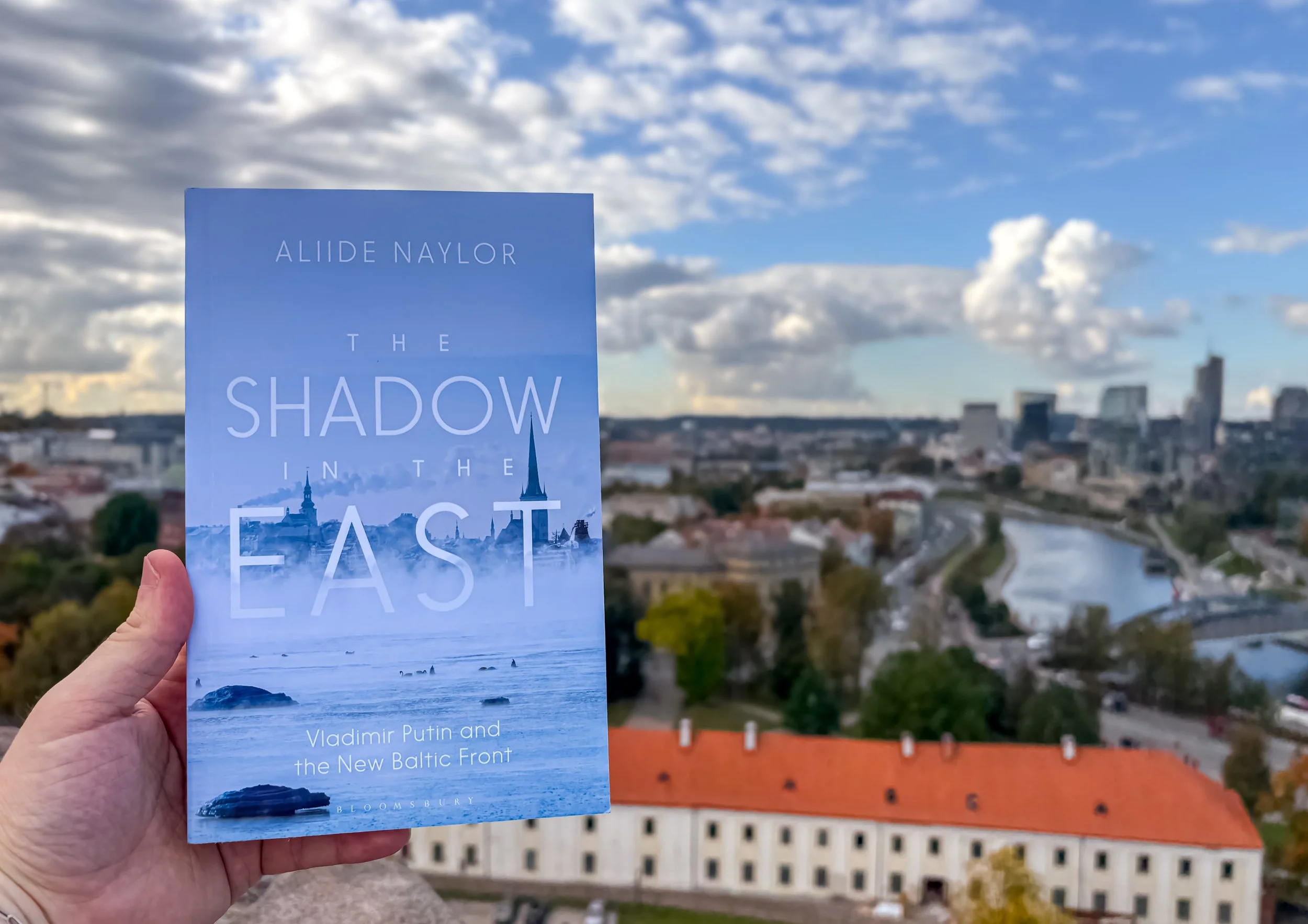
Published in 2020 by Bloomsbury Academic, an imprint of Bloomsbury Publishing, New York, NY, and London, UK
Paperback edition published in 2023
ISBN: 9781350352896
When Western media covers events in the Baltics (a rarity in itself), it almost exclusively focuses on the threat that Russia poses to the region. In light of the Russian annexation of Crimea in 2014 and the invasion of Ukraine in 2022, there is a great deal of speculation about whether Putin will try to start another front in the Baltics. This became especially salient when, just before the invasion of Ukraine, Putin justified the “special military operation” by claiming that Russia is protecting the people of Donbass from being subjected to a genocide by Kyiv.
As such, in the Baltic states, with their Russian-speaking populations particularly concentrated in the eastern regions of the countries (particularly in Latvia), there is a low-grade fear that Putin might use a similar justification to invade. Even nearly four years later, Ukrainian flags adorn the windows of so many businesses, apartments, and government buildings. While there is a strong sense of solidarity in the Baltics with Ukraine's struggle, a swirl of uncertainty surrounds the future. Latvians, Lithuanians, and Estonians are fiercely independent and would undoubtedly fight virulently against any attempt to occupy the region. Yet, when speaking to them (particularly my Latvian friends), I found that while there is a latent, low-level fear of Russian incursions, most do not see it as an immediate, all-consuming threat.
Beyond all the political pontificating and speculation from the West, we should pay closer attention to what the people on the ground in the region are thinking about their future. In her 2020 book, The Shadow in the East: Vladimir Putin and the New Baltic Front, journalist Aliide Naylor offers a vivid account of the Baltic states (namely, Estonia, Latvia, and Lithuania) as they navigate the increasingly tense geopolitical terrain between the Russian Federation and the Euro-Atlantic alliance. Drawing on extensive travel, interviews, and historical insight, Naylor presents the Baltics as both witnesses to and participants in the evolving logic of “hybrid war,” wherein influence is exerted not only through military means but via culture, memory, media, and identity.
Overview:
Naylor examines the contemporary socio-political dimensions of Estonia, Latvia, and Lithuania in the 21st century, especially in relation to Russia and the threats posed by Vladimir Putin. She looks at how these states live with a historical burden of Soviet occupation, cultural and geopolitical pressure from the East, as well as their identities, internal politics, and relationships with the West and NATO. By examining the day-to-day experiences of those living in the region, Naylor shows how the Baltics are more than passive frontline or “buffer” states. Rather, their societies, politics, and everyday life reflect and respond to their position between the East (Russia) and the West. Along the way, she reveals what these experiences in the Baltics tell us about modern Russian foreign policy, hybrid warfare, soft power, and identity formation in the process of state-building.
The Baltics occupy a sensitive frontier. Bordering Russia (and Belarus, in the case of Lithuania) while also members of NATO and the EU, they are seen in Moscow’s narratives and strategy as part of the “near abroad.” The Baltics are often underappreciated in Western discourse, but their experiences show early signs of how Russia applies pressure, using hybrid tools, “soft power,” border provocations, and other methods to assert power. While military confrontation is possible, much of the struggle is much more subtle, often playing out in competing narratives about history, in energy dependence, in cyber operations, in the lives of minorities, and in the multivaried geopolitical symbolism of the region. In short, Naylor argues that the “new Baltic front” is not necessarily about imminent war, but about a front in terms of influence, ideology, security, and hybrid threats. As such, the Baltics represent a boundary where Russian assertiveness and Western democracy clash in various social, political, and cultural domains.
Deeper Dive:
In Chapter One, Naylor examines how the various histories of occupation within the Baltic states have shaped their self-understanding. Naylor emphasizes how the legacy of occupations (first under the Soviet Union, then under Nazi Germany, and back under Soviet control) continues to shape identity, politics, and security thinking in the Baltics. These painful legacies are very much alive in the Baltics, as past injustices, deportations, and shifting borders shape present attitudes, domestic politics, and present-day relations with Russia. She points out that the formation of a distinct national identity in each Baltic country occurred in different ways, often varying by language, ethnicity, and historical experience.
Naylor also explores how these countries often participate in whitewashing their past, often distancing themselves from their active participation in the Holocaust (as the Germans were largely welcomed as an emancipatory force against the Soviets). She discusses how the crimes of the Soviets are often portrayed as being equal to (or even greater than) the Nazis, as Hitler and Stalin are continually compared side by side in museums and memoirs. As such, the physical reminders of their shared painful past through the content of these countries’ occupation museums and public memorials play into current politics and identity. The result, Naylor writes, is that “the occupation era is ‘othered’ and remains an alien presence inside the countries even as it is recalled as part of their own history” (27).
With the rise of Putin and Trump, there has been an increasing sense of instability and fear within the region. On one hand, some people wave off concerns of a Russian invasion, citing the countries’ integration into NATO as a deterrent from military incursions. On the other hand, Trump’s inconsistent commitment to NATO and close relationship with Putin have raised doubts among many about NATO’s ability to respond to a sudden attack. As such, the fear of future Russian incursions ebbs and flows depending on who you ask, as Naylor writes, “The fear of Russian incursions into the Baltics very much varies from person to person and can be affected by various factors, including location, lineage, exposure to information, and professional role in society. But as long as the Baltics stay vigilant about what could be, there seems to be a much lower chance of what ‘could be’ actually coming to pass” (37).
In Chapter Two, Naylor examines Russia’s utilization of illicit trade and smuggling operations on the border, cyberattacks, airspace incursions, and misinformation campaigns to project power in the region. She interrogates how Russia views the Baltics and the activities that occur both on the border and in Russian media. Putin largely sees the region as lost parts of greater Russia, and as territories with significant Russian-speaking populations, the Russian media has been utilized to sow discord and disinformation. Narratives inside Russia often accuse the Baltic states of “Russophobia,” often citing language requirements for citizenship and hyping up stories of anti-Russian discrimination.
While Estonia, Latvia, and Lithuania have worked diligently to counter many of these sources by teaching information literacy and monitoring media consumption, “it is impossible to sever links with pro-Russia sources of information and propaganda completely” (58). Russia’s methods are not just military but include cyber attacks, information war, smuggling, border provocations, and cultural influence. Naylor argues that these efforts illustrate how Russia more often uses provocations to test NATO’s responses and project power in the Baltics. These are seen as testing grounds or laboratories for strategies later used more broadly. In sum, she writes, “in terms of Russia’s actual threat, the country values threat perception and reaction almost as much as its actual capacities” (59.
In Chapter Three, Naylor examines how the construction of historical memory still has resonance in policy and attitudes in the present day. She begins by recounting how Russians often justify the occupation of the Baltic states as a protective measure against the Nazi regime. She travels to the Russian town of Rzhev, where the establishment of a war memorial honoring Stalin has received mixed reception, with some claiming that it whitewashes his crimes, while others claim that it is a monument to the heroism and the vital contribution of the Red Army in defeating the Nazis. Naylor writes, “While the Baltics are more than happy to consign the Soviet era and the events of the Second World War to some almost alien past, in Russia, its presence is pervasive, and intentionally so, in the fabric and culture of a society which is simultaneously distinguishing itself as modern” (66)
She also highlights the rise of Vladimir Putin to the head of the Russian government, noting how it is nearly impossible to ascertain his popularity with any degree of certainty. Putin views the collapse of the Soviet Union as one of the greatest geopolitical disasters of the last century, and he believes that many citizens then found themselves outside of the national boundaries. She briefly details the gradual expansion of NATO eastward as countries sought integration into more stable markets. This occurred despite verbal promises from the West not to do so.
As such, Russia has quite a complicated relationship with the Baltic. The Baltics occupy a geopolitical limbo, situated historically, culturally, and strategically between Russia to the east and Western institutions (EU, NATO) to the west. The region had been on the Western edge of the Soviet Union, and it was famous for its spas and holiday retreats for elite citizens. Now, although Russia views the Baltics as essentially Western, it also views Latvia with the most enmity, as ethnic tensions are much more prominent there than in Lithuania or Estonia. Some Russians believe that the Baltics are trying to construct their own nationalist identity by using Russia as a foil, or an “other” to be diametrically opposed (76).
Naylor also notes the role of generational differences, as younger people in the Baltics are more oriented toward European integration and more removed from memories of Soviet oppression than older generations. Attitudes towards the Baltics also vary depending on geographical location, as Eastern Russians are much more concerned with events close to them in China, the Koreas, Japan, and Mongolia. In short, Naylor writes,
Yet, whether in the Baltics or across present-day Russia, the same blend of history, memory, and fear conditions the way that Russia reacts - on an individual and geopolitical level. But the blend is subject to different present-day conditions in both countries, with Russia’s military patriotism, and a collective sense of military might presiding over the country, with the sense that history was very much written by Russia, by Russians. In the Baltics, there is a much stronger sense that history was written from the outside. (84)
In Chapter Four, Naylor focuses on the Russian-speaking population that chooses to reside in the Baltic States. The Baltics have significant Russian-speaking populations (especially Latvia and Estonia). Their status, rights, and integration are often contentious. Naylor explores how these internal divisions factor into external pressure from Russia. She finds that attitudes toward Russia from this group vary wildly depending on age, socio-economic status, and personal connections. Younger, liberal Russian speakers (especially in Riga) see greater opportunities by being closer to the West, and are more likely to try to assimilate into the larger culture. Meanwhile, there is a notable contingent of Russian speakers who are politically excluded and socioeconomically disadvantaged (particularly in Estonia and Latvia), despite their mixed feelings toward Russia and its policies.
Finally, she highlights the viewpoints of wealthy Russians who used to vacation in Jurmala during the Soviet era, when the west coast of Latvia was renowned for its spas and resorts. Naylor points out the salient identity politics between Latvians and Russians, particularly surrounding language test requirements for citizenship. Ultimately, she writes, “The Russian-speaking population in the Baltic states, while calcified in its own communities, is far from homogenous. Some of its members integrate well with natives, some are socioeconomically sidelined, and some reject attempts to learn the local languages despite the fact that this can improve their domestic socioeconomic prospects” (105).
In Chapter Five, Naylor details the various grassroots organizations and efforts to think and enact a different future for the Baltic states. As such, she discusses the role of comic writers, housing organizations, musicians, choral festivals/competitions, religious transformation, the food scene, and investments in technology. Whether discussing how Lithuanians, Estonians, and Latvians navigate between the poles of paganism and Christianity, or how local kitchens are embracing a trend of “slow food” by emphasizing local cuisine and foraging for wild mushrooms berries, cabbage, and asparagus, and parsnips, this chapter shows Naylor digging into the various cultural touchstones that define the contemporary Baltic experience (or, at least, how they would like to be seen).
To counter this progressive view, Naylor also mentions how political, social, and religious conservatism still dominates much of the landscape of the Baltics, as she particularly focuses on the struggle for LGBTQIA+ and abortion rights. These issues face opposition on two fronts: in traditionally Catholic countries like Lithuania, queer rights and abortion are consistently opposed, while in Estonia and Latvia, in addition to religious objections, many Russian residents see queer rights as a sign of Western degeneration and depravity. In addition, progressive movements also face suspicion and immense obstacles, due to the region’s history under the Soviet Union. Thus, Naylor writes, “Social activism in Lithuania also comes with an odd downside - anti-government action can be construed as pro-Russia even if the activism is completely unrelated; ;lobbying for rights that the Russian government would never condone, you can still be accused of doing Putin’s bidding” (130).
In the final Chapter, Naylor turns toward the larger geopolitical tensions in the region. Given their vulnerabilities, the Baltics rely heavily on their membership in NATO and the EU for security. Yet, there are tensions within this alliance, such as the Baltics, Ukraine, and Poland’s opposition to the Nord Stream pipeline, regardless of Germany’s full-throated embrace of its construction. Naylor discusses how the region is attempting to move away from its dependence on Russian oil, which has been accelerated in the years after this book’s publication.
She also briefly discusses the socio-economic consequences of the region’s integration into the EU, which came with the destruction of certain sectors of the economy. These material conditions have led to the rise of the far-right within the region, echoing much of the rest of Europe. Fears about incoming immigration, Islamophobia, xenophobia, anti-LGBTQIA sentiment, and mass outward migration from the region have all proved to be vital fuel for right-wing populism in the region, although it takes different forms than the rest of Europe due to the region’s proximity to Russia.
In her Conclusion, Naylor warns that the Baltics are likely to become more central in the competition between Russia and the West. What happens there is not isolated from the rest of the world, but rather it matters for European security broadly. She argues that the ways in which Russia exerts influence there may serve as templates for other regions. She argues that Western Europe sees (or sometimes underestimates) the Baltics, and it is important for the West to pay attention to what happens there. In conclusion, she writes,
The Baltic nations are a victim, in a way, of the superpowers’ psychological need to manifest an ‘east’ vs ‘west’ polar mentality. But the Baltics are not simply people caught between; they have the right to establish their own paths. They have a lot to offer the world. European, but still new and unencumbered by centuries of self-perpetuating structures. The future of the Baltics can be bright. (157)
Commendations:
There are several dimensions to Naylor’s account that are well worth commending. First and foremost, the book's main strength lies in Naylor’s commitment to grounding geopolitical analysis in the lived experiences of people in the region. Her writing foregrounds communities often marginalized in state-centric security discourses, often highlighting the direct experiences and testimonies of Russian-speaking minorities in Narva (Estonia), residents of Latgale (Latvia), and borderland communities shaped by smuggling, historical displacement, and economic marginalization. By doing so, she foregrounds the ambiguous, often hybrid identities that people within these communities hold, thus complicating overly simplistic nationalist binaries.
Naylor also pays attention to how younger generations view their identity, their history, and their place in Europe. She shows the tension between those who lived through Soviet or occupation times (either personally or through their parents) and those born after independence. There’s also an exploration of how tech, culture, urban life, and globalization are reshaping the social fabric of the Baltic states. I deeply appreciated these inside peeks into the everyday lives of these people, and Naylor’s engagement with these local voices adds a valuable ethnographic texture that neatly complements her political analysis. These vignettes provide a compelling counterpoint to the abstraction of conventional strategic studies that all too often dominate Western literature about the region, and they offer rich material for scholars who are interested in the complications of identity politics and the economic and social trajectories of post-socialist transitions.
Through highlighting these voices on the margins of society, Naylor implicitly critiques both Western triumphalism post-1991 and the binary Cold War logic that frames the Baltics merely as a frontline in a “New Cold War.” For those who have no background in the history and sociopolitical landscape, this is a much-needed, nuanced corrective to much of what is typically written about the region, which is to frame the region as a buffer against Russia or to celebrate its status as a successful “post-Soviet” state. Naylor challenges the reduction of these states to pawns between Russia and NATO, allowing for a more multipolar understanding of Baltic agency, history, and struggle. By doing so, Naylor succeeds in resisting the all-too-common reduction of the Baltic states to passive pawns in a “new Cold War” between East and West. This is especially important to counter the neo-imperial tendencies in Western discourse, which often use smaller nations as ideological battlegrounds while ignoring their internal complexities.
Another notable strength of Naylor’s work is her nuanced and rigorous treatment of historical memory as a way to construct national identity. Naylor navigates the contentious terrain of Baltic historical discourse with gentleness and care, recognizing the ways in which Soviet and Nazi occupations continue to structure contemporary political imaginaries. She is particularly sensitive to the political weaponization of history from both sides of the political spectrum, including by the Russian state, which portrays the Baltic republics as sites of Russophobia and fascist revisionism, and by Baltic nationalist actors who mobilize victimhood narratives to legitimize exclusionary policies. This is a critical intervention in a region where public history remains a volatile political force and a source of deeply held tensions and conflict. Her analysis is particularly astute in focusing on how history is mobilized to serve contemporary power structures, whether they are in the form of Russian revisionism or Western-backed nationalist historiographies.
Finally, when it comes to the threat from Russia, Naylor is nuanced and critical in her analysis of both dismissive and fatalistic perspectives. She correctly recognizes the myriad of hybrid threats beyond the military, as she identifies that the real “frontline” today is less about tanks and more about disinformation, cyberwarfare, economic dependency (particularly in the energy sector), and historical narrative manipulation. One core idea throughout the book is that Russia is not merely a distant threat but actively involved in the affairs of the region in ways large and small. This includes propaganda, political interference, exacerbating issues with the Russian-speaking minority in the Baltics, escalating border tensions, and more subtle forms like energy dependency and smuggling. Naylor astutely embraces a broader conception of power beyond purely military-statist frameworks, instead emphasizing the role of soft power tactics in the region that act as symbolic gestures and projections of power. By doing so, she highlights a much more subtle and complex network of activities and attitudes in the region, eschewing and countering more pessimistic or alarmist assessments of the region’s possible near future.
Critique:
Despite its ethnographic richness and narrative nuance, Naylor’s account suffers from a few drawbacks. Firstly, while Naylor purposefully removes herself from much of the narrative for the sake of “objectivity,” we thereby miss out on any kind of analysis of the stories and data that Naylor presents. The book is very loosely organized, reading more like a string of interconnected stories without much exploration or depth. It lacks a central thesis to tie everything together, and without this core, many of the stories she presents begin to quickly fade from memory.
Additionally, while Naylor provides deep insight into the geopolitical dynamics and cultural identity of the Baltics, she largely ignores class and structural economic conditions. Most glaring is her inattention to class and material inequality in the post-Soviet era. While Naylor mentions regional disparities, depopulation, and youth emigration toward the end of the book, she stops short of fully analyzing these as outcomes of the neoliberal restructuring that followed EU accession. The Baltic states, often celebrated as “post-Soviet success stories,” underwent some of the most radical economic transitions in the region, such as mass privatization, austerity, and welfare retrenchment, especially in rural and post-industrial areas.
All of these massive reforms, which were required to integrate into the EU, produced new exclusions and vulnerabilities in the region. The post-Soviet economic transition in the Baltics was not simply a triumph of democracy over authoritarianism, as the classic liberal narrative goes. It was also a violent class restructuring, often at the expense of workers, pensioners, and ethnic minorities. These dynamics are largely absent from the book and represent a missed opportunity, especially given the ways in which socioeconomic marginalization feeds both populist nationalism and susceptibility to Russian efforts to assert soft power in the region.
Furthermore, the book occasionally reproduces liberal assumptions under the guise of geopolitical realism. Naylor is critical of Russian aggression, but she fails to subject Baltic nationalism (particularly in Estonia and Latvia) to the same scrutiny. In these states, significant portions of the Russian-speaking population remain disenfranchised due to restrictive citizenship laws rooted in ethno-linguistic criteria. These policies, while often justified as defensive measures against hybrid threats, also constitute forms of civic exclusion that deserve to be critiqued. Instead, these non-citizenship policies affecting Russian-speaking minorities are framed as security concerns, rather than as civil rights issues. It would be fruitful for future studies to directly engage with these contradictions, highlighting the limits of ethnic-based identity politics that are cloaked in the language of sovereignty or Euro-Atlantic integration, especially in the context of liberal state-building projects.
Moreover, Naylor insufficiently interrogates the dominant Western geostrategic interests in the region, especially regarding the interests of the EU and NATO. While she offers a welcome departure from crude pro-Western triumphalism, Naylor’s account nonetheless presumes the benevolence of Western institutions in supporting democratic resilience, often portraying the West as a neutral guarantor of freedom. This overlooks how militarized liberalism and neocolonial logics have shaped the post-Soviet space. The Baltics, positioned as buffers or “frontline states,” are not merely protected by the West, but are also instrumentalized within broader structures of global power. I would be interested in questioning how narratives of security and civilization are mobilized to sustain ideological hegemony in both Eastern and Western contexts.
Finally, as a leftist, I had one final quibble with Naylor’s account. The book gives significant attention to the traumas of Soviet occupation, and rightly so, since it dominates much of the country’s recent political memory. Yet, Naylor does little to differentiate Stalinist authoritarianism from wider socialist traditions in the region. Her treatment of Soviet history tends to conflate Stalinism with socialism writ large, offering little space for alternative leftist traditions in the region. The complex legacies of communism, which contain emancipatory and egalitarian elements along with its authoritarian manifestations, are flattened into a monolithic story of repression. As such, there is little engagement with dissident leftist voices, socialist movements pre- or post-USSR, or those who critique both capitalism and authoritarianism. This narrows the ideological spectrum and risks reinforcing the dominant binary between Western liberal democracy and Eastern authoritarianism, rather than exploring possible alternative political futures.
Conversation:
As someone with personal ties to the region, I always find it fascinating to read about the daily lives of people in the Baltics. Talking with my friends in Latvia, it is always enlightening to hear their perspectives beyond the headlines. When Western Europeans write about the region, it is often touted as an illustration of how integration into the EU and NATO is essential for the security of the West against Russian aggression. Yet, beyond all of the glossy headlines of a burgeoning “digital society” and the tourist-friendly Old Towns of Tallinn, Riga, and Vilnius lies a starker image.
Estonia is often painted as a tech utopia, touting a startup scene in Tallinn that makes Western pundits swoon. But daily life is more layered and complex. While Tallinn and Tartu enjoy modern infrastructure and decent wages, much of rural Estonia is aging, depopulating, and underfunded. Villages in the counties of Võrumaa or Ida-Virumaa often struggle with poor transport, limited healthcare, and emigration. In places like Narva, there’s a lingering sense of alienation. Integration efforts exist, but linguistic and historical divides remain real in everyday education, media, and employment. Additionally, the cost of living, such as rent and food costs, has climbed rapidly in Tallinn, fueled by tech money and EU mobility. Meanwhile, wages haven’t kept pace for teachers, nurses, or service workers. While state services are efficient, austerity politics limit welfare expansion, revealing a strong neoliberal undercurrent even in supposedly progressive policies. As such, Estonia’s "tech dream" often papers over the vast social inequality that still defines much of the country.
Likewise, in Latvia, Riga’s architectural wonders, beautifully orchestrated choral festivals, and cosmopolitan spirit can too easily mask deep regional disparities and complex social problems. Like many post-Soviet states, Latvia is hyper-centralized, as Riga hoovers up the majority of investment, jobs, and access to culture, while towns in the east like Daugavpils or Rēzekne face youth flight and post-industrial decay. Soviet-era flats dominate the housing landscape, with gentrification and Airbnbs making Riga’s center increasingly inaccessible to locals. Meanwhile, abandoned buildings continue to decay and rot in smaller towns.
Latvia’s population is also rapidly declining, as a whole generation has left for opportunities in Ireland, Germany, Scandinavia, and the UK. Schools are closing in rural areas, and teachers strike regularly over poor pay. Additionally, the politics of Russian-language education remain a fault line. Many Latvian Russians, especially the elderly, still feel stateless or marginalized. Latvia's government clings to EU fiscal orthodoxy, cutting pensions and social programs to stay within Eurozone lines. This hits the working class and rural poor hardest, yet media narratives still glorify the region’s macroeconomic "stability."
Finally, in Lithuania, Vilnius is often portrayed as a young college city, full of creativity and political savviness, home to massive protests, slick startup companies, and cutting-edge art scenes. But Lithuania’s story is also one of socio-economic polarization, as it has one of the EU’s highest levels of income inequality. It is true that wages have risen, but not enough for cashiers, factory workers, or pensioners. Suicide and alcoholism remain serious issues across the country, especially in post-industrial areas like Šiauliai or Alytus, while access to mental health services is patchy and unequally distributed. While Vilnius is seeing a growing feminist and queer movement, it faces pushback from the Catholic Church and conservative politicians. LGBTQ+ rights are better than in Poland, but far from secure. To even the most casual observer, there is a growing tension between fast-changing urban norms and more traditional rural values.
Even so, there’s a visible younger generation pushing back, organizing around labor rights, climate action, and anti-authoritarian solidarity. The memory of Soviet occupation makes “the Left” a hard sell for some, but new movements are reshaping what radical politics look like. Lithuania often touts its "freedom" narrative, emphasizing its freedom from Russia, from communism, and from regulation by external forces. But what does freedom mean when average workers are woefully underpaid, apartments grow increasingly unaffordable, and half your friends have left for Scandinavia or Western Europe?
Across the Baltics, political corruption, low trust in institutions, and anti-communist paranoia still shape public life. Emigration to Western Europe has hollowed out communities, creating both economic instability and a crisis of care for the elderly left behind. Housing remains increasingly insecure, as urban real estate bubbles and the lack of rent controls make life harder for young people and families. Teachers, nurses, and social workers diligently work to keep society afloat, but they face stagnant wages and little political respect.
These are the stories that are all too often absent from the headlines, as larger geopolitical tensions in the region often dominate and capture our attention. Yet, the countries of Estonia, Latvia, and Lithuania need to be examined on their own terms and treated with the dignity and respect that other sovereign countries take for granted. There are immense challenges, to be sure, but there are also opportunities for this region to be one of the most vibrant and beautiful parts of the world. We need to break down the barriers that we’ve constructed and justified through weaponized historical narratives and truly reconcile with the past in a meaningful way to move forward and provide a dignified life for all people in each of these countries.
Conclusion:
Overall, The Shadow in the East is an engaging, empathetic, and timely contribution that succeeds in humanizing the geopolitical challenges facing the Baltic states. While it falls short in analyzing the material underpinnings of insecurity, the exclusionary aspects of nationalism, and the ambiguous role of Western power in the region, Naylor’s work opens important conversations about what it means to live on the “frontlines” of power in the 21st century. Her grounded, journalistic approach captures the ambivalence, complexity, and anxiety of the post-Soviet Baltic experience under the long shadow of Russia. As such, for general audiences who want to gain a more nuanced understanding of the region, Naylor’s work is a fantastic entry point into learning more about the people who make up the Baltic states.
In official narratives, the Baltic states are portrayed as resilient "success stories,” often touted as models of neoliberal transformation, digital innovation, and hard-won independence. But day-to-day life in the region tells a more uneven story. It is undoubtedly one of resilience and fortitude, but it is also one of quiet precarity, sociopolitical and economic inequality, and ideological struggle. To fully grasp the Baltic region’s place in the 21st century, we need more of these materialist, intersectional, and deeply personal readings of the region. We need voices that critique both East and West and center the social struggles of ordinary people, not just the contours of state power.
There is so much beauty in this region of the world. It’s not just in the deep, lush forests of Latvia, the rolling farmland of Lithuania, or the cathedrals that loom over the Old Towns in each of the countries’ capitals. It’s also in the way that the people in these countries persist, adapt, and continue to push their governments forward in making the region a more just and equitable place for all, regardless of language, religion, sexuality, or ethnicity. That’s the part missing from the headlines, and the one we so desperately need to give our attention. The future for the Baltic states can indeed be bright, but only if we organize and work together in international cooperation and solidarity to make it reality.